Unified Media Platforms (UMPs) are a new software category without a settled industry definition, which can make it hard for advertisers to evaluate what each vendor offers. This buyer’s guide checklist gives you questions to ask every UMP vendor on your shortlist so you can compare the answers side by side.
---
Aperiam Ventures introduced the term Unified Media Platform in its September 2026 article, “Unified Media Platforms: Who, What and Why?” According to Corey Ferengul, a Managing Partner at Aperiam, UMPs “represent a highly disruptive category and mark one of the most compelling, high-impact applications of AI in marketing to date.”
What is a Unified Media Platform (UMP)?
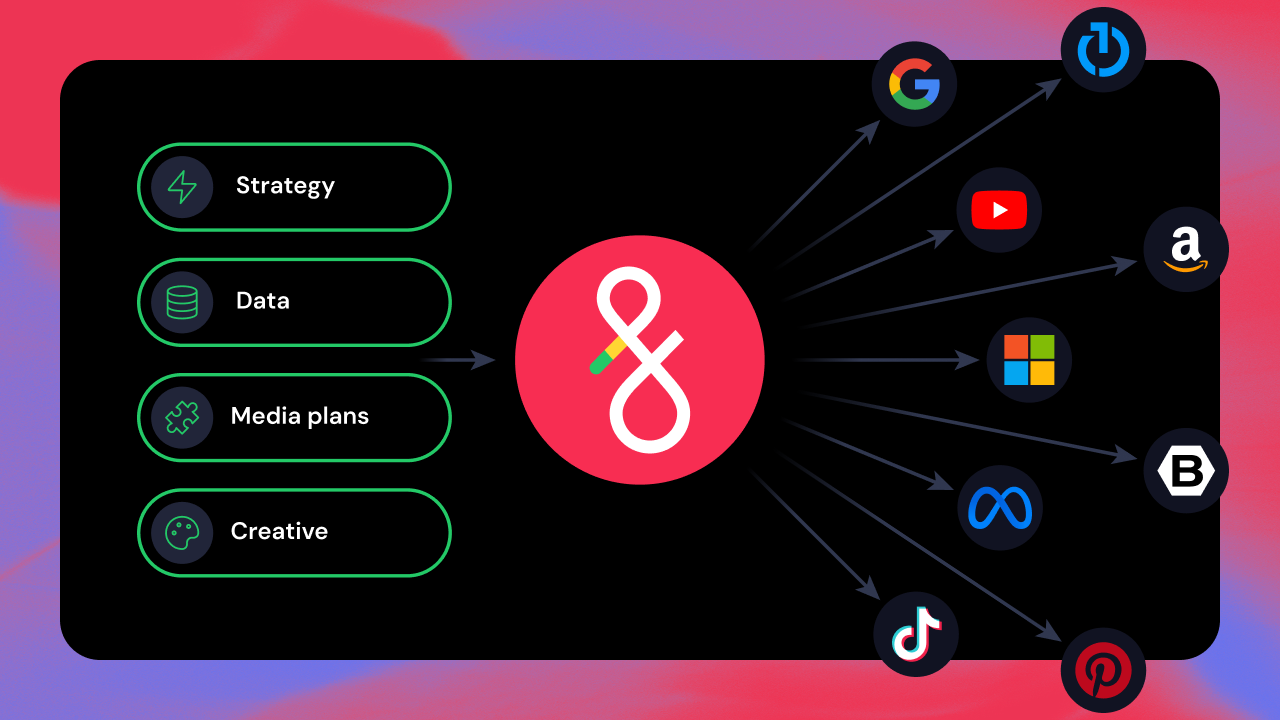
A Unified Media Platform (UMP) is software that connects directly to ad platform APIs and uses an integrated AI decision engine, giving advertisers a single, consolidated interface to manage and automate the end-to-end ad campaign lifecycle. With a UMP, advertisers can build a campaign once and launch it across multiple channels simultaneously. The system pulls multichannel results back into the same tool for AI analysis and recommendations, which can then be sent back out to each platform for ongoing optimization.
To simplify things, we’ll use Aperiam’s definition of a UMP as our starting point. In reality, though, this software category is still very loosely defined.
So, with so much variation in what these solutions do, how can advertisers determine what a platform must do to qualify as a UMP?
How to evaluate a Unified Media Platform: seven must-haves
Because “Unified Media Platform” does not mean the same thing from one vendor to the next, we’ve created an RFI checklist you can use to evaluate UMPs across seven areas: channel connectivity, reporting, AI, publisher execution, integration, governance, and business readiness.
To make things easier in your Unified Media Platform evaluation, we’ve outlined Fluency’s capabilities so you can compare other vendors' answers to ours. Fluency is the Agentic Advertising Operating System, and it meets Aperiam’s definition of a Unified Media Platform. We have run governed, agentic workflows on live campaigns for nine years for more than $7 billion in lifetime ad spend.
Here are the seven capability categories to ask every vendor about.
Channel connectivity, scale, and account onboarding
| Unified Media Platform requirement |
What to ask the Unified Media Platform vendor |
Fluency |
| Walled garden connectivity |
What walled gardens does your platform connect to? |
Google Ads; Meta Ads; Microsoft Advertising; TikTok Ads; Pinterest |
| Partner API Maintenance |
As channel partners release new API functionality, how quickly are those new features available in your platform? |
For the last eight years, we have worked directly with publisher APIs. |
| Major Demand Side Platforms (DSPs) connectivity |
Can all connected DSPs be managed from one interface? |
Yes, you can manage all of our connected DSPs through Fluency. We have connections with The Trade Desk, DV360, and Amazon Ads Agent. |
| Set up campaigns in one place, launch them on every channel at the same time |
Can I build a campaign once and launch it across every connected channel simultaneously? |
Yes. You can create accounts and campaigns across platforms from approved plans or data. |
| Proven scale across hundreds or thousands of ad accounts |
How do the system’s workflows hold up when executing across hundreds or thousands of ad accounts? |
Fluency executes ~250K local campaigns monthly and is used by 150+ agencies operating across thousands of locations to the tune of $3 billion annually. |
| Onboard existing accounts without disrupting live spend |
Can you bring in existing accounts and campaigns without disrupting live spend? |
Yes. Reverse sync pulls existing accounts and campaigns into Fluency. We activate read-only mode during onboarding to block platform-level updates from going live. |
Multichannel reporting, measurement, and insights
| Unified Media Platform requirement |
What to ask the Unified Media Platform vendor |
Fluency |
| Historical data availability on day one |
Can the system pull in data from the last 24 months (or longer) as soon as everything is connected? |
Yes. Reverse sync pulls in any existing accounts and campaigns into Fluency, going back 2 years. |
| Automated cross-channel reporting |
Does the system automatically pull in performance data across channels and DSPs into one view? |
Yes. Customizable, unified dashboards that you can automatically syndicate to stakeholders and export to other common formats. |
| Integrate first-party data sources for decisioning and analysis |
Can we add our own first-party data to the platform for decisioning and analysis? |
Yes. Fluency is engineered to integrate all your essential data sources. |
| Independent cross-channel measurement |
Is performance reported on from above the channels, or does each channel grade its own results? |
Our reporting agents sit above every channel and report on performance across all of them in one view. |
The role of AI within the Unified Media Platform: decisioning, execution, and data security
| Unified Media Platform requirement |
What to ask the Unified Media Platform vendor |
Fluency |
| Separation of AI recommendations from live execution |
Do AI agents execute directly against live spend or platform settings? |
No. AI agents express intent and recommend. Only the governance layer executes approved actions on live campaigns. |
| Data usage for LLM training |
Is my data used for LLM training? |
Data run through our platform is never exposed back to the LLMs for training purposes. |
| Safe access for outside and third-party agents |
How do our in-house agents or third-party agents connect to the system safely? |
Your agents connect to Fluency through a secure, governed, SOC II-compliant gateway. |
| AI token costs for executed campaign changes |
How are AI token costs calculated for executed changes on campaigns? |
Because changes are carried out by the governance layer instead of LLMs, there are no token costs for executed changes. Fluency makes millions of campaign changes each month through the governance layer. |
Publisher execution and write access: campaign creation, testing, and localization at scale
| Unified Media Platform requirement |
What to ask the Unified Media Platform vendor |
Fluency |
| Ad account creation from within the platform |
Can I create ad accounts from within the platform? |
Yes. Accounts are created automatically from a data source (e.g., CRM, Google Sheet, or file store like Sharepoint and Dropbox) or via an API when you sign a new client. |
| Bulk campaign creation and updating |
Can I create and edit campaigns, ad groups, ad sets, geo targets, and budgets? |
Yes. All campaign elements are automatically created and edited according to each connected publisher’s specs. The system also enables bulk creation and changes across an account, campaign, or portfolio. |
| Cross-channel governance rules and thresholds |
Can I set rules and thresholds across channels and define what good looks like independent of each platform's own scoring? |
Yes. Budget pacing strategies, performance bounds, and Blueprint rules that apply in the execution path. |
| A/B testing of creative and campaign variables |
How easy is it to modify creative, run A/B tests, and try new channels? |
Blueprint Trials make it easy to A/B test variables against a control. From Blueprints, you can republish winning variations or creative updates across accounts. |
| Trial campaigns on new channels |
Is it easy to run trial campaigns or run tests for any channel integrated with the system? |
You can test on any channel already integrated with Fluency. Your existing naming conventions, budget logic, and reporting carry over to the new channel, so there is no new workflow to build. |
| Automatic campaign changes made from external data triggers |
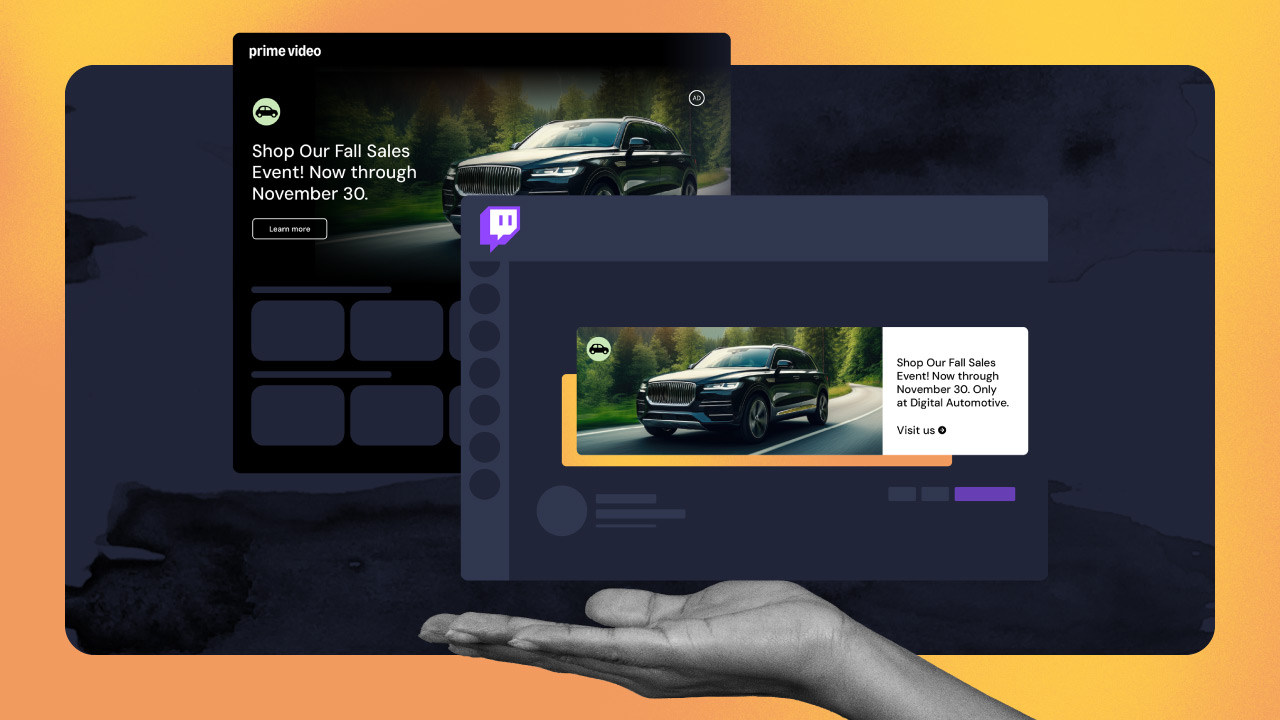
Can changes in external data (e.g., inventory, creative, weather, booking changes) update campaigns automatically? |
Yes. Data from outside systems can trigger automatic changes on campaigns, without manual work. If you can draw it on a flow chart, you can automate it. |
| Multilocation (localized) execution at scale |
Can I generate localized campaigns for hundreds or thousands of locations at once? |
Yes. Every localized variable (e.g., address, inventory, local creative, etc.) populates the campaign elements. Governed build agents generate the right campaigns, with the right elements, for every location across channels at the same time. Adding a location is as easy as adding its data. |
Integration and access: MCP, systems of record, and AdCP
| Unified Media Platform requirement |
What to ask the Unified Media Platform vendor |
Fluency |
| Govern access for agentic calls either via MCP or other protocols |
Does the platform offer governance of agents through MCP or another protocol with read and write access? What decides which actions outside agents can take? |
Fluency acts as the governance layer between external agents and publishers. Your business rules are encoded into the governance layer to ensure that any decisions you’ve made about how to operate are enforced. Any edge cases are escalated to a human. We are currently offering MCP access, and have AdCP and AAMP on our roadmaps. |
| Integration with systems of record (CRM, OMS, DAM, inventory) |
Can it connect to our other systems? |
Yes. Fluency connects to CRM, OMS, DAM, and inventory feeds, plus API connections to tools such as Salesforce, Tableau, and Power BI |
Governance, auditing, and human control for automated ad execution
| Unified Media Platform requirement |
What to ask the Unified Media Platform vendor |
Fluency |
| Automatic budget overspend protection |
Do agents monitor budgets and goals, plus automatically pause spend when a limit is reached? |
Yes. Overspend protection pauses spend when a budget or goal is met. |
| Automatic budget underspend protection |
Do agents monitor budgets and goals and adjust campaign structure to ensure spend thresholds are met? |
Yes. Underspend mitigation and reallocation recommendations can also adjust pacing within your set guardrails. |
| Governance rules enforced in the execution path |
How are governance rules, like spend limits or brand guidelines, enforced? |
All governance is encoded in the execution path, not written into each AI prompt. Agents only carry out changes on live campaigns when they fit the rules you approved |
| Audit trail for every agent and human action |
Is every action logged, attributable, and reviewable? |
Yes. Our Change History feature records changes across budgets, campaigns, ad groups, and ads. Every action is logged and auditable, whether it’s made by agents or humans. |
| Human override of automation at any level |
Can teams see, adjust, and override automation at any level? |
Yes. Teams can view and override budget pacing at any level of the portfolio, and read-only mode blocks updates at the platform level |
| One-action pause across every channel and campaign |
Can one action pause spend across every channel and campaign at once? |
Yes. One action can stop every channel, campaign, and dollar at the same time |
| 24/7 anomaly detection and alerts |
Does the platform flag anomalies and problems around the clock? |
Yes. 24/7 monitoring, anomaly detection with recommended actions, and alerts across budget, serving, and compliance categories |
| Built for media buying, execution and management |
Is the platform designed for digital advertising, including governance and AI agents built around how advertising works? |
Yes. Fluency is designed to support media buying, execution and management. Our governance is built for the unique needs of the advertising industry and proven over nine years of execution. Our reasoning agents are context-aware, with industry-specific intelligence. |
Business readiness: security, services, financial stability, and pricing
| Unified Media Platform requirement |
What to ask the Unified Media Platform vendor |
Fluency |
| SOC 2 compliance |
Is the vendor SOC 2 compliant? |
Yes. SOC 2 Type II |
| Enterprise security review and independent audit |
Can the vendor pass an enterprise security review, and does an independent audit back its claims? |
SOC 2 Type II, verified by an independent auditor. Data stays in the customer's environment, and every action is logged |
| Implementation and ongoing professional services |
Can someone help us customize and support our implementation and help us operationalize (and even operate) the platform? |
Yes. Our Agentic Enablement Services covers configuration and administration with a CSM and Certified Administrator. We also have a Managed Delivery option if you want our team to run day-to-day campaign management for you. |
| Vendor financial stability |
Is the company profitable and funded? |
$40M Series A in 2025. #1 on G2 for eight consecutive quarters. |
| Annual managed ad spend as proof of scale |
How much ad spend has the platform managed? |
Fluency manages $3 billion in annual ad spend. The system has run agentic workflows on live campaigns for more than eight years. |
Frequently asked questions about choosing a Unified Media Platform
What should advertisers look for in a Unified Media Platform?
A strong Unified Media Platform connects directly to walled gardens and DSPs, builds and launches campaigns across channels from one workspace, and reports on all of them in one view. It also enforces your rules before any change reaches a live campaign, and it logs every action. You should also make sure that AI agents recommend changes while a governance layer ensures that only approved actions are executed and that any outside agents connect through a secure, governed gateway.
How should I evaluate a Unified Media Platform?
Send every vendor on your shortlist the same questions across the seven categories, then compare the answers side by side. Ask for evidence behind each answer, such as managed ad spend, the number of accounts the platform runs, a SOC 2 Type II report, and a sample audit trail. Then ask each vendor to demonstrate onboarding an existing account, and confirm that the platform can do it without disrupting live spend. For more on vendor scoring, see how Goodway Group evaluated 70+ platforms.
What questions should I ask a Unified Media Platform vendor?
Four questions separate out UMP vendors from look-alike systems:
- Can I build a campaign once and launch it across every connected channel at the same time?
- Do AI agents execute directly against live spend, or does a governance layer check and execute every change?
- Can I bring in existing accounts and campaigns without disrupting live spend?
- Is every action (whether by an agent or a person) logged, attributable, and reviewable for auditing?