Agentic Advertising Operating System: What it is, How it Works, and Key Benefits
Learn how an Agentic Advertising Operating System (AAOS) uses a governance layer to scale multichannel AdOps, reduce manual work, and keep your team in control.
Published on
November 11, 2026
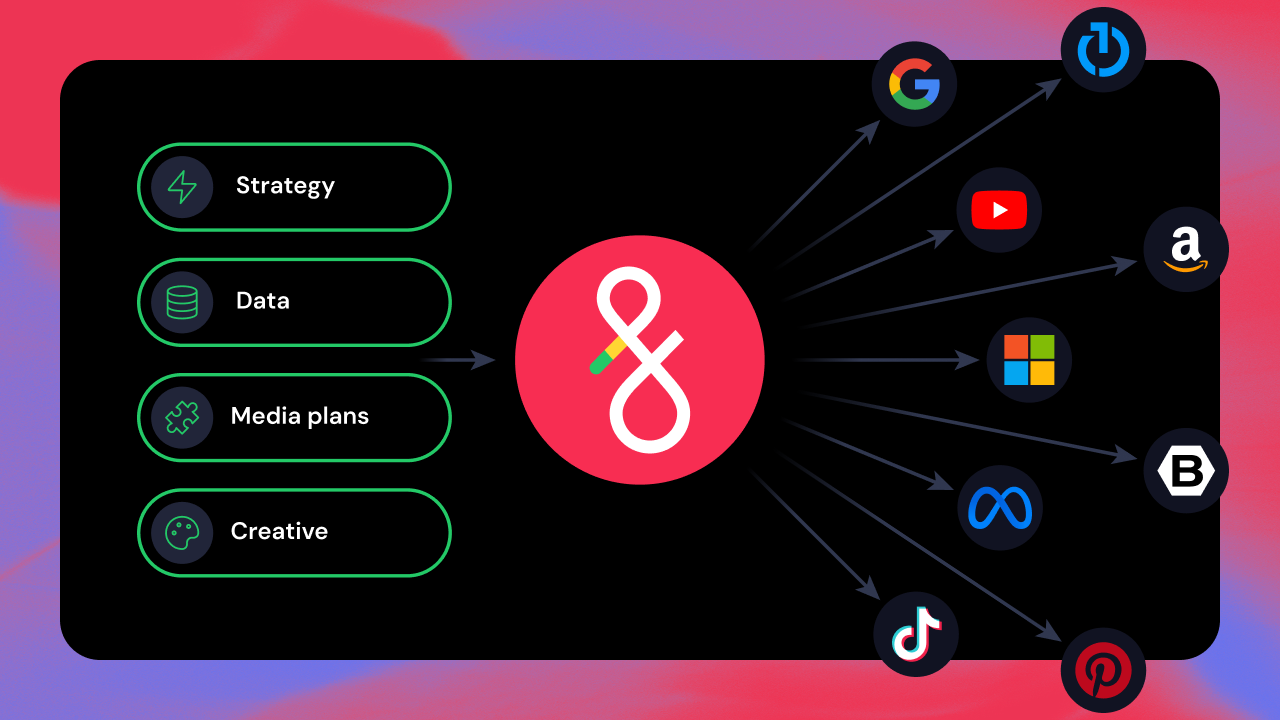

An Agentic Advertising Operating System (AAOS) is defined as the software system that connects an advertiser’s data, systems, and ad channels into one place so agents (checked by a governance layer) can run campaign execution across all of them. An AAOS replaces the platform-by-platform work that caps how many accounts each strategist can handle manually. It is the ideal agentic advertising solution for agencies and in-house teams managing hundreds or thousands of accounts across Google Ads, Meta Ads, TikTok, and programmatic DSPs like The Trade Desk and Amazon Ads Agent. Fluency’s AAOS, formerly called DAOS, pairs probabilistic agents for recommendations with a deterministic governance layer for execution. This guide breaks down how the model works and what it changes for your team.
---
It’s never been more difficult (and time-consuming) to manage multichannel digital ad campaigns. This is especially true if you still rely on single-channel operational workflows to run your campaign strategies.
An Agentic Advertising Operating System (AAOS) changes where your team spends their time and energy. By connecting data, tools, and processes into one governed system, an AAOS executes core AdOps workflows through a governance layer (configured by your team) while reasoning agents (LLM-based and probabilistic AI agents) read performance signals and suggest what to change next.
You may have seen this category of advertising software called a Digital Advertising Operating System, or DAOS. The system hasn't changed; it does the same kind of work, in the same way. The name AAOS now reflects what runs inside it: AI agents for reasoning and a deterministic governance layer for executing. In this guide, we'll break down what an Agentic Advertising Operating System is, how it works, its key benefits, and why it's a must-have for large-scale advertising teams.
What is an Agentic Advertising Operating System?
An Agentic Advertising Operating System is software infrastructure that runs and optimizes paid media execution across channels through agents instead of using manual, tool-by-tool workflow. It works by connecting systems, data, and channels into a unified platform. This enables agents to recommend multichannel fixes, optimizations, or adjustments. It also allows you to use a single, customer-wide governance layer to keep every agent action within bounds your team sets for core advertising operations workflows such as cross-channel campaign creation, budget pacing, and multichannel report generation.
The governance layer is a deterministic executor of your rules: this ensures the same inputs produce the same outputs every time, and that each change is auditable. Reasoning agents recommend actions based on performance data and trends, but they never act on live spend directly.
Think of an agentic OS like your computer's operating system. A computer operating system manages all the different programs and hardware on your computer so they can work together without you manually bringing them together.
An AAOS does the same for your advertising operations. It brings together everything required to build, manage, and report on multichannel ad campaigns, making it possible to use agents to execute pivotal tasks for these workflows in one system. In this way, Agentic Advertising Operating Systems are a type of Unified Media Platform (UMP).
An AAOS is the foundation for your entire advertising operations to run on. It gives your teams:
- A single source of truth for every ad campaign in your portfolio, across multiple channels
- An orchestration layer to run your entire cross-channel media strategy through
- Safe, secure, encoded governance for AI and agent-powered workflows
It does this by connecting your data sources (e.g., account data in your CRM, inventory feeds, audience signal data, budget data, creative assets) and your advertising publishers (Google Ads, Meta Ads, TikTok Ads, and programmatic DSPs like The Trade Desk and Amazon Ads Agent) into one governed system configured to your unique operational processes, client strategies, and campaign requirements.
By unifying operational workflows, data, and governance rules into one system, your human teams work at the strategic level while the governance layer executes relevant and approved tasks across campaigns, accounts, and channels in real time, at scale.
How does an Agentic Advertising Operating System work?
An Agentic Advertising Operating System is the central data and operational hub for your digital advertising program. It connects your systems of record, data, and channels into one place, enabling a governance layer to check agent-proposed AdOps tasks before they go live across every major ad channel. By bringing vital campaign components into one governed system, an agentic OS simplifies core AdOps workflows. As a result, teams can manage consistent, high-performing campaigns at scale with far less time and effort.
Here's a quick rundown on how an Agentic Advertising Operating System works to make this possible:
- Ingests data from multiple ad publishers, first-party data sources, and more: An agentic OS can pull data from key sources, including CRMs, product catalogs, DAMs, third-party data sources, and spreadsheets. Most importantly, the system can also pull and push data to major ad publishers. Any time a change or update is made to a multichannel campaign from within the system, the changes go live everywhere at once without requiring teams to log into individual platforms.
- Centralizes campaign strategies and playbooks: Think of the agentic OS as the "hub" for all your ad channel strategy "spokes." You can codify each client or account’s unique campaign strategies, rules, and playbooks into the system. This could be campaign structures for different client verticals (e.g., automotive, real estate) or specific budget pacing strategies. Codifying these elements means the governance layer executes within your campaign requirements, and AI agents base their recommendations on them.
- Automates multichannel campaign execution from one place: Once your campaign rules, budgets, and creative assets are synced in the agentic OS, the governance layer builds, launches, and manages multichannel campaigns using agentic automation workflows. Deterministic execution applies your rules the same way across major ad publishers, decreasing task work so teams can focus on strategic efforts.
- Brings multichannel campaign management into one interface: With an agentic OS, your team interacts with one system to make changes, monitor performance, and manage budgets across your entire portfolio. It’s also what lets agents manage cross-channel media optimization within bounds you set. This saves a ton of time whether you're managing 50 accounts or 50,000 accounts across major ad channels.
- Enables and automates multichannel reporting: Because an AAOS brings data from all major ad channels into one platform, it eliminates the complexity and manual effort required to create cross-channel reports. Teams can use it to automate report creation, scheduling, and delivery for every account in your portfolio, freeing your team’s time for high-value work.
- Puts AI agents to work on the same foundation: Integrated LLM-based intelligence runs inside the AAOS. With full access to unique client goals, brand requirements, and multichannel data, creative agents generate compliant copy. Insight agents also analyze cross-channel performance and recommend optimizations for your entire portfolio. AI agents never act on live spend directly. Your team sets the bounds for what gets acted on, and the governance layer executes it.
How is an Agentic Advertising Operating System different from the advertising tools I use today?
The fundamental difference between traditional automation and workflow tools and an Agentic Advertising Operating System is that an agentic OS functions as foundational business infrastructure: a source of truth uniting all key systems and workflows, instead of using single-channel or campaign-specific workflows. The system executes, orchestrates, and governs repetitive, high-volume tasks across every major channel where you run ads.
Most third-party advertising tools solve specific, isolated AdOps problems, like reporting or bid management on a single channel. Unfortunately, this approach forces teams to repeat the same core functions (budgeting, campaign setup, reporting, etc.) for every channel, campaign, or client. Continuing to do these tasks manually makes it impossible to decouple your business’ growth from your team’s headcount growth.
Additionally, because single-channel or single-workflow tools layer into your existing tech stack, they fail to address the fundamental issues caused by campaign management fragmentation: technical debt, slow manual handoffs, and time-consuming repetitive work. All these manual workflows slow teams down and drive up risky errors.
An Agentic Advertising Operating System removes the operational bottlenecks hindering revenue and operational efficiency. It builds the "data pipes" connecting all the technologies and channels you need to efficiently run multichannel campaigns at scale. This fundamental shift replaces redundant tech, merges complex processes into cross-channel workstreams, and enables scalable execution and cross-channel insights that traditional (isolated) tools simply can't provide.
For example, many teams today likely rely on human labor to manage and manually stitch together campaigns from disparate data sets. Essentially, your people are a (very expensive) "glue" assembling multichannel campaigns piece by piece. An AAOS replaces this way of working. It connects to your data sources, and the governance layer builds and updates campaigns directly from them.
Centralizing everything (data, tools, and strategy) into one system allowed teams to break away from the traditional ways of managing multichannel campaigns that hinder scalability. Instead, your ad strategists can focus on campaign strategy and strengthening client relationships: two things best left to human teams.
Key benefits of using an Agentic Advertising Operating System
- Scaling AdOps execution: This is the biggest win for advertising teams. Using multichannel automation rules within an agentic OS means you can launch one campaign or a thousand with the same amount of effort. You can execute a high volume of AdOps tasks without taxing your human teams, making it possible to decouple portfolio growth and employee headcount. Our latest client data shows that a typical ad strategist can handle two to four times (2-4x) more accounts with an agentic OS than they could previously.
- Operational speed and agility: With everything living in one place, teams can take immediate action for core AdOps tasks across multiple channels at one time. This includes copy changes, new campaign launches, keyword adjustments, etc. AI agents analyze real-time performance from major ad channels and recommend changes, then your team can accept, reject, or edit them. You can also set routine changes to be made automatically, and the governance layer carries out what is approved. Some tasks, like budget pacing, can be handled automatically by the governance layer under policies you set. As one of our agency clients said, “We’ve automated the whole [budget pacing] process and don’t have to really do anything. We just make sure that the numbers are correct and Fluency allocates the budget the way we need it to.”
- Strategic brand control: Centralized management in an Agentic Advertising Operating System enforces one rule set for governance across your entire portfolio. Brand rules, budget constraints, compliance obligations, and client requirements are encoded in the system and applied to the actions agents take, with an audit trail. That keeps thousands of localized campaigns brand-safe, compliant, and aligned with client-specific strategies.
- Reducing risk: The governance layer performs tasks exactly as configured: same inputs, same outputs, every time. Automating repetitive AdOps tasks this way reduces human error, along with the expensive rework and client credits that follow it. Reasoning agents propose changes but never act on live spend directly, so AI recommendations stay separate from execution.
- Improving campaign performance: Cross-channel management gives you more control over unified goals and KPIs, which is especially important when you’re managing hundreds or thousands of accounts. The governance layer reduces errors, accelerates campaign launches, and keeps budget pacing on target across every channel.
- Running AI safely at scale: An AAOS keeps probabilistic agents on recommendations and deterministic agents on execution, so you can use AI without putting live spend at risk. Because it connects to all your advertising channels and data, insight agents draw on cross-channel performance data when they recommend what to change.
- Streamlining and simplifying agency-client collaboration: An AAOS provides a single "pane of glass" for you to jointly collaborate with clients. Whether it's onboarding, media asset uploads, or budget or geo-targeting adjustments, you can give clients clear visibility into what you're doing and why. An agentic OS also centralizes client requests and approvals, reducing manual handoffs (and a ton of emails) by automatically integrating any changes right into campaigns, even if they're already live.
- Shifting people from operational to strategic work: An AAOS automates the time-consuming, tedious work that burns people out. It frees your team to focus on what they do best: strategy, client relationships, and creative thinking. Not only does this reduce the need to hire every time you bring in more clients, but it can also improve talent retention for your current team. When people can do more meaningful, high-impact work, they're far less likely to leave.
The governed, automated, and agentic future of advertising
Ask anyone working "on the ground" in digital advertising: daily campaign operations are far too complex to manage effectively using manual processes. An Agentic Advertising Operating System solves the root causes of these problems. It connects to your data and publishers, configures your processes as workflows, and uses the governance layer to execute within the bounds your team sets.
An agentic OS provides advertisers with scalability, speed, and control that individual tools can't. It enables advertisers to execute localized, data-powered campaigns at scale while also providing real-time insights that inform strategic decision-making.
By reducing inefficiencies and eliminating silos, an agentic OS transforms how advertising teams operate, delivering better results with less effort. Read some case studies to see what top advertisers have achieved by unifying their advertising operations.
FAQ: Agentic advertising operating systems in practice
Is an Agentic Advertising Operating System the same thing as a DAOS?
Yes. A Digital Advertising Operating System (DAOS) is the earlier name for the same category of software. The updated name reflects how the system now operates: reasoning agents analyze performance data and recommend actions, and the governance layer executes core AdOps workflows inside the rules your team has encoded. If you have evaluated a DAOS in the past, you are looking at the same foundational, agent-led infrastructure.
How is an Agentic Advertising Operating System different from a DSP or a campaign management tool?
An AAOS sits above your DSPs and campaign management tools rather than replacing them. A DSP executes programmatic media buying, and a campaign management tool handles workflows within a single channel. An AAOS connects to all of these platforms, along with your systems of record and data sources, and enables the governance layer to execute multichannel workflows across every channel from one governed system. Your team continues to use the platforms it already relies on, but it no longer has to manage each of them manually.
Who should use an Agentic Advertising Operating System?
An Agentic Advertising Operating System is built for advertising teams whose account volume has outgrown manual, platform-by-platform operations. This includes agencies managing multiple clients, multi-location brands running localized campaigns at scale, and in-house media teams operating across several channels. The value of an agentic OS increases with every additional channel, client, and location, because that is where manual handoffs, fragmented data, and the risk of costly errors grow the fastest.
Your playbook for building a safe and scalable agentic advertising program.
Download nowRelated Posts
How Amazon Ads Agent Fits A Multichannel Strategy: Audiences and Open-Web Reach