Agentic Programmatic Advertising for Multi-DSP Execution and Governance
Published on
October 14, 2026
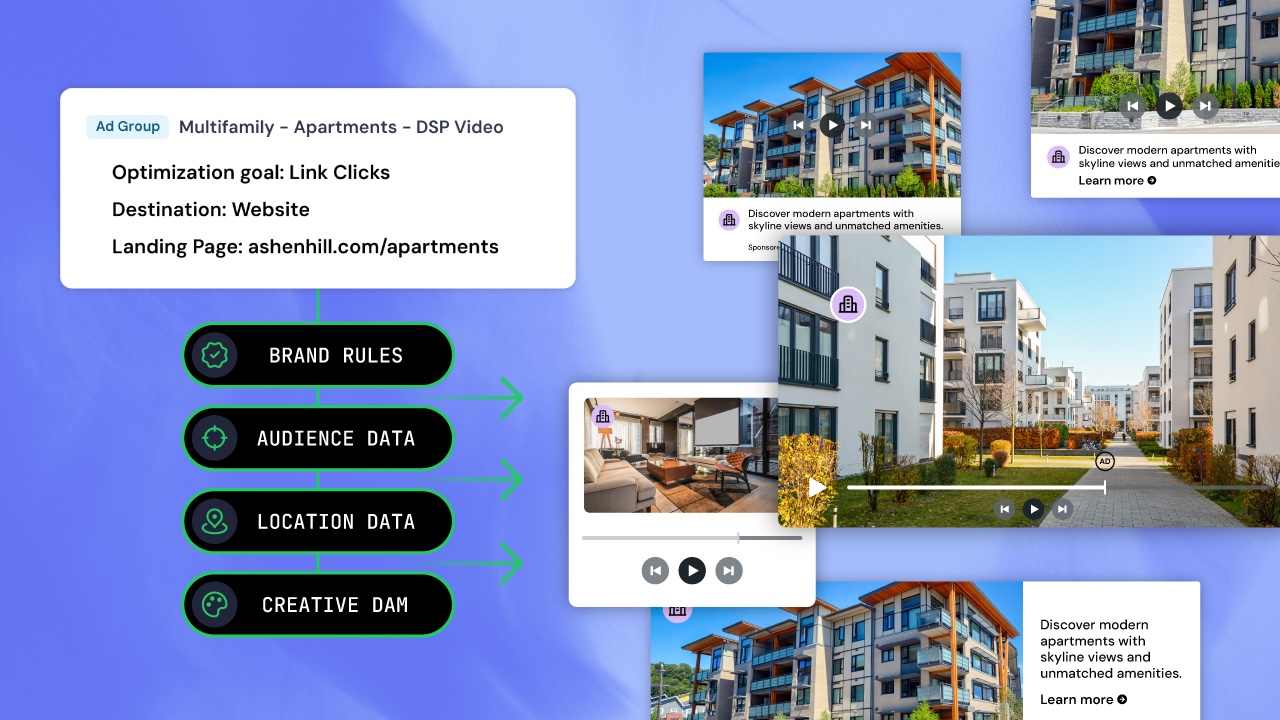

Agentic programmatic advertising is the use of agents to launch, manage, and optimize programmatic campaigns across multiple DSPs from one governed system. The most valuable use case for enterprise agencies is agentic workflow execution, in which deterministic agents apply the same setup, governance, naming, and reporting rules across multiple DSPs simultaneously. When used within a centralized system, agents can manage consolidated programmatic workflows that slash manual setup, management, and reporting workflows for human teams.
When software vendors talk about agentic programmatic advertising, they often pitch a single AI feature inside a single platform. Native agents will keep getting better at what each DSP does natively. However, the larger payoff for your agency comes from running programmatic work across DSPs from one governed system.
The biggest value agents provide your ad agency comes from running campaigns across multiple DSPs from a single governed system that enforces identical rules, guardrails, and reporting across different platforms.
By consolidating multiple DSP management into one agentic advertising system, agencies see the payoff even before a single bid gets placed. They save hours in programmatic setup time, achieve consistency across accounts, and can expand campaigns to a new DSP without hiring a specialist.
The sections below follow the cost from its source to its fix: why agencies run several DSPs, what manual setup costs at scale, and how an agentic advertising system lets agents run every DSP under one set of rules.
Why do enterprise agencies use more than one programmatic DSP?
No single platform can reach every inventory source, audience, and channel, so using multiple DSPs widens your ability to land placements where your clients want. The problem is that every DSP comes with its own account, fees, and system for your teams to manage. Essentially, even though agencies need to work with multiple DSPs to keep clients satisfied, it results in convoluted workflows and can spike overall programmatic costs.
There are three primary types of DSPs:
- Independent, publisher-neutral platforms. The Trade Desk is the leading example of a publisher-neutral DSP. Even though it doesn’t own its own media, its position as a neutral buyer means it has one of the deepest open-web programmatic inventories and the greatest configuration control for traders. The Trade Desk is also the market leader in connected TV (CTV), with direct integrations into Disney, NBCUniversal, and Warner Bros. Discovery.
- Platforms tied to a media or data ecosystem. Platforms like Amazon Ads Agent and Google’s DV360 specialize in exclusivity. For example, DV360 is the only DSP that lets you buy programmatic ad space for YouTube, which accounts for a large share of all internet streaming. Amazon Ads Agent (formerly Amazon DSP) gives advertisers access to Amazon's valuable and extensive shopper-intent data. It also carries exclusive inventory across Prime Video, Twitch, and Thursday Night Football. So, if your client wants to advertise on Thursday Night Football, you can only buy that ad space through Amazon.
- Specialist and challenger platforms. Platforms such as Yahoo DSP, Viant, and StackAdapt compete on specific strengths, such as CTV, household-level identity, native, or ease of use for mid-market teams.
The programmatic market looks this way because of who controls supply. Media owners, like Google and Amazon, hold their most valuable inventory and first-party data inside their own platforms. CTV and retail media added more gated supply on top of that. Signal loss pushed you toward platforms with strong identity and first-party data, and concerns about fees and supply-path transparency made depending on a single intermediary riskier. For most enterprise clients, the goals on the brief will require more than one platform.
So, yes, working across multiple DSPs widens your reach for clients. But every DSP comes with its own account, fees, and nuanced system for your team to learn and manage, and because they don’t share the same setup, targeting, and reporting logic, your agency’s operational costs climb with each one you add. That cost adds up fastest in manual campaign setup.
Why running manual programmatic campaigns at scale is so expensive
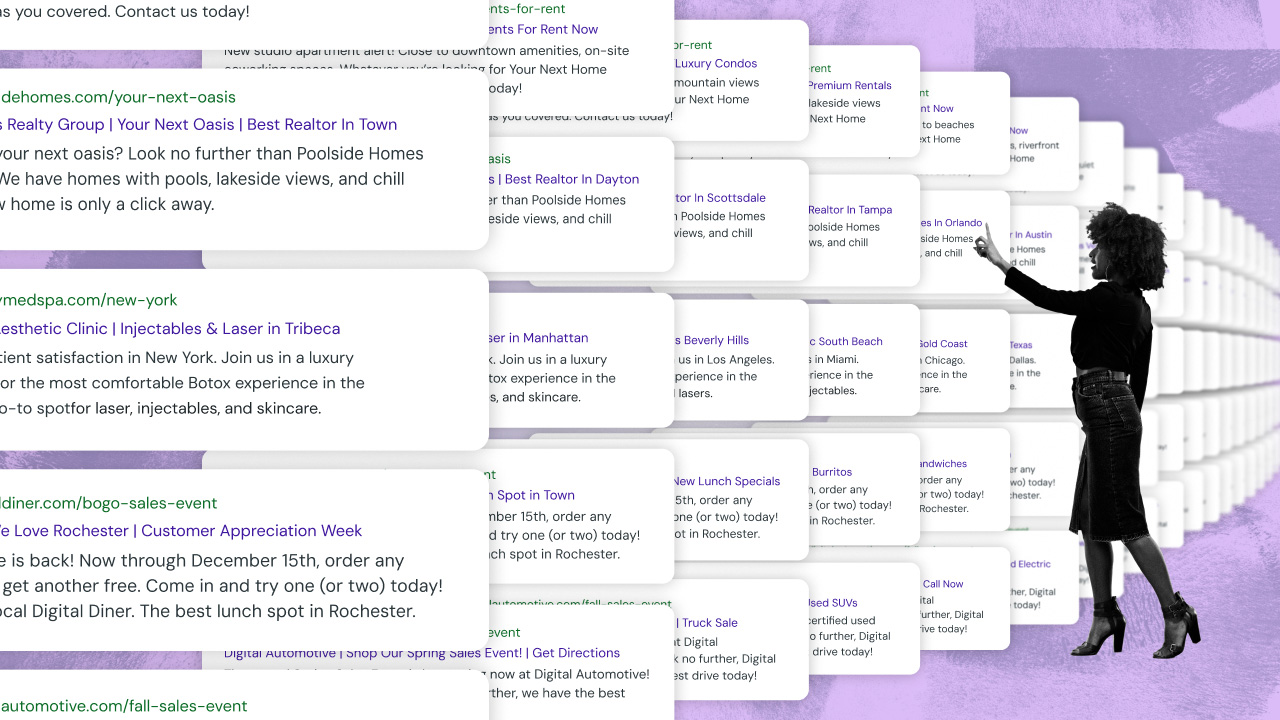
The labor required for front-end setup drives up the cost of running programmatic campaigns at scale, not the fees charged by DSPs. A single enterprise account can mean building hundreds or thousands of individual programmatic campaigns, each with its own targeting, creative, and budget rules to configure by hand. Large agencies are forced to build out massive dedicated DSP or programmatic teams to pull this off, because you need a lot of people to handle setup complexity.
Consider a multi-location client that wants to run a campaign for each of their 300 locations. Without agentic automation, your team needs to manually build the account, campaign, ad group, and creative objects—then set budgets and select targeting parameters—300 times.
In fact, one of Fluency's enterprise agency clients has described their workflow for The Trade Desk as the heaviest operational lift they manage anywhere in their stack. The team’s workload scales directly with any increase in locations instead of shifts or changes in strategy.
PPC Land validated the impact of manual AdOps work, citing Fluency’s 2026 Benchmark Report finding that 71% of ad operations teams say manual processes put client campaigns at risk.
The manual workload—and the accompanying costs, risks, and bottlenecks—multiplies once you add a second or third DSP into the mix. Fortunately, this is exactly where consolidated DSP management and agentic workflows start to pay off big time in terms of labor costs, time, and effort.
Consolidated DSP management is the first step to agentic multi-DSP operations
Consolidated DSP management is the first step to agentic multi-DSP operations because it puts every DSP under one set of rules so agents can build, govern, and report on campaigns the same way for every platform. Once your DSP management lives in one system, your team sets governance, naming, and reporting standards once, and agents apply them regardless of where a campaign runs.
Say a client wants to run CTV ads on Amazon Prime, Netflix, and Disney+ using the same creative, bidding limits, and audiences. With consolidated DSP management, your strategists build the campaign once and use agents to deploy it across Amazon’s walled-garden platform and an omnichannel, open-internet DSP like The Trade Desk. Deterministic agents automatically apply the governance rules to every campaign. Best of all, your client’s strategy stays consistent across platforms, and your team’s setup and QA work stays the same no matter how many DSPs the campaign runs on.
Consolidation also unifies your reporting by rolling performance metrics from every DSP into one view. You can configure reports around the success metrics you or your client define, making it possible to evaluate overall program success against the specific goals that matter to each client.
Consolidation also brings operational consistency to the rest of your stack. Your strategists can run one operational model across several platforms instead of stacked workarounds on separate systems, and the same governed model that covers The Trade Desk and Amazon Ads Agent also applies to walled-garden spend, like Google Ads and Meta Ads. While media ops teams often expect a unified management platform to work for either their DSPs or walled gardens, an Agentic Advertising Operating System like Fluency enables you to run both under one set of rules.
Consolidating your DSP stack into one system doesn't require giving up the platform-specific levers each DSP offers, either. Consolidation standardizes how campaigns get built and governed. The platform-specific settings each DSP needs to perform well stay intact underneath it.
For example, if you’re using Fluency to manage The Trade Desk campaigns, strategists can still:
- Choose from The Trade Desk’s pacing or Fluency's automated budget pacing
- Flip between a recurring monthly budget and a flighted lifetime budget when a campaign's needs change
- Apply PMP deal tags for exclusive inventory like Netflix CTV placements.
How agentic workflows fit into programmatic advertising
True agentic programmatic advertising means using agents to autonomously manage campaign workflows across multiple DSPs simultaneously, resulting in major time and cost savings. Native platform agents will keep getting stronger at what each DSP does natively, but they don't remove the expensive, manual AdOps work that accompanies multiple DSP campaign management. Agentic solutions can solve the operational workload pain points of managing multiple programmatic DSPs, delivering high ROI for enterprise-scale agencies.
Fluency's Blueprints is a perfect example of how agentic solutions can help enterprise agencies easily manage multiple programmatic DSPs. Blueprints enable strategists to pull data, assets, and rules into one framework, solving the issue of each DSP structuring targeting parameters, naming fields, and budget settings differently. From there, agents build and manage campaigns directly across platforms using that same logic every time.
For instance, The Trade Desk requires a new flight for every campaign every month, but other DSP platforms support an open-ended monthly budget. Fluency Blueprints reads the shape of a client's existing flights and assigns the right budget type on import. Strategists can still flip between a recurring monthly budget and a flighted lifetime budget whenever a campaign's needs change, but they only need to set up the campaign once within the system.
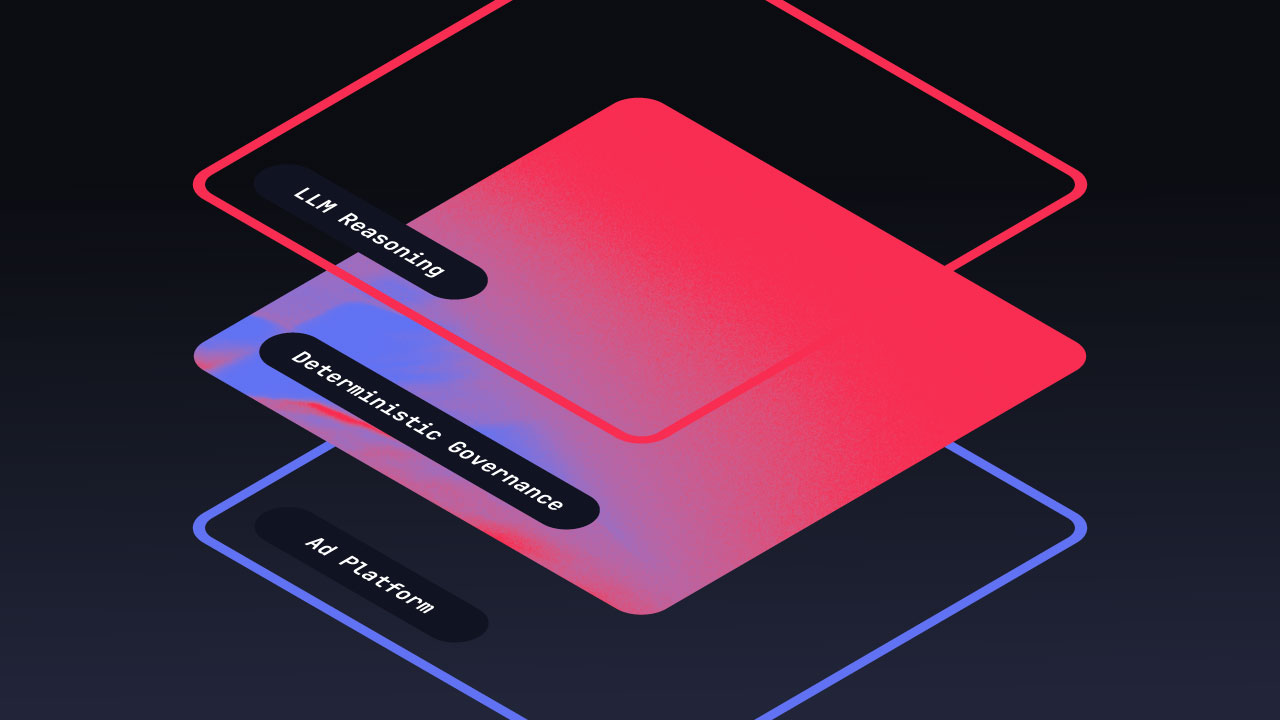
Most importantly, Blueprints' conditional "valid when" statements ensure every agent-driven action is deterministic rather than probabilistic: if a condition is true, a campaign element activates; if it's false, it stays disabled. Rather than guessing at the right adjustment or pushing every AI recommendation live, the system's governance layer ensures it executes a fixed set of rules consistently, campaign after campaign, platform after platform. That consistency is what cuts AdOps hours per campaign, ultimately lowering labor costs as you add DSPs to your stack.
Why agentic programmatic’s real ROI is multiple DSP campaign execution at scale
Agentic programmatic advertising delivers the most value to enterprise agencies in campaign execution across DSPs. Repetitive setup workloads drive up programmatic labor costs at scale.
The first step is to consolidate your programmatic campaign management workflows into one system. As a result, you can use deterministic agents to slash manual setup workloads, giving teams a consistent way to launch, manage, and report on programmatic campaigns—even if they run on different DSPs.
Agentic programmatic solutions, like Fluency Blueprints, let you apply deterministic rule sets across your DSP stack. Strategists build a campaign once, then agents correctly deploy the right strategic parameters everywhere. Simply put, agentic workflows save the most time and labor where the work repeats: setup, governance, and reporting across every DSP.
Frequently asked questions about agentic programmatic advertising
What is agentic programmatic advertising?
Agentic programmatic advertising uses AI and deterministic agents to safely launch, manage, and optimize campaigns across multiple DSPs, all from one centralized system. The real value of using agentic workflows is consolidating multi-DSP workflows to cut manual setup time and labor costs.
How does agentic AI apply to programmatic media buying?
Agentic AI in advertising can support individual in-platform decisions, but agents are most beneficial in reducing the manual AdOps work of setting up and managing campaigns across multiple DSPs. For example, within Fluency’s Agentic Advertising Operating System (AAOS), agents ensure the same rules and parameters are applied everywhere, turning hours of per-DSP setup into a single framework build.
If I consolidate my DSPs, can I still see unified performance reporting across all of them?
Yes. If your client runs campaigns across more than one DSP, such as Amazon Ads Agent and The Trade Desk, you can get full cross-channel reporting visibility within Fluency's Data Explorer. Performance across every DSP in your stack rolls into one consolidated view, using the same reporting structure regardless of platform. This saves your team from manually stitching together separate exports from each platform's native dashboard.
Fluency’s multichannel reporting capabilities also include Google Ads, Meta Ads, Microsoft Advertising, Pinterest, and YouTube.
Which programmatic DSPs can I manage through Fluency?
Fluency supports three DSPs: Basis, Amazon Ads Agent, and The Trade Desk. If you already have a seat on any of them, you can use it directly within Fluency. With Fluency, your AdOps team can manage programmatic campaigns across multiple DSPs at the same time. Deterministic agents ensure that every campaign follows the same governance, naming, and reporting structure, no matter which platform it runs on.
What formats and channels does Fluency support for The Trade Desk?
Fluency supports display, video, CTV, audio, mobile in-app, and digital out-of-home on The Trade Desk, along with custom DMP integrations and PMP deal targeting for exclusive inventory like Netflix CTV placements. Each campaign currently runs a single creative type (all video or all display); mixing creative types within one campaign is on the roadmap but not yet supported.
Related Posts
How is Agentic Automation Used in Digital Advertising?