How Ad Automation Improves Multichannel Agency Workflows and Portfolio Efficiency
Published on
December 13, 2024
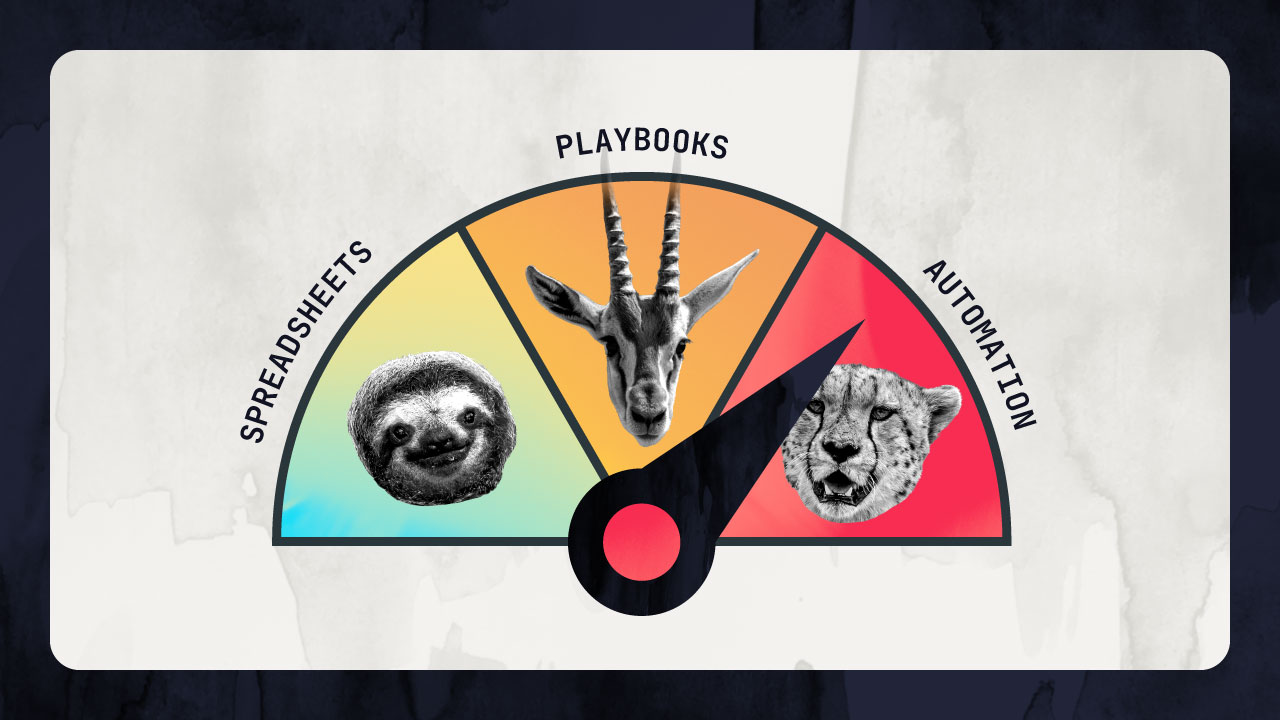

How does automation improve ad agency operations? Ad automation improves agency operations by drastically reducing the time required to build, launch, and manage multichannel campaigns. By using a Digital Advertising Operating System, advertisers can automate error detection, budget management, and bulk ad editing. Automating manual campaign tasks increases speed-to-market and reduces operational errors.
For ad operations leaders managing expanding client portfolios, scaling efficiency requires structural AdOps workflow changes rather than endless hiring loops. This guide evaluates how multichannel ad automation eliminates manual campaign execution, resulting in faster launch times, streamlinedQA, and automated error detection across your entire portfolio to protect agency margins.
---
Digital advertising is a high-speed, high-stakes race. Audiences expect relevant ads, companies demand continuously improving performance results, and advertising channels evolve faster than most AdOps teams can adapt. For ad agency owners, this means one thing: your team has to keep up or you risk falling behind.
This “need for speed” covers nearly every aspect of advertising today. Teams need greater speed to market, faster task execution to make more time for strategic work, and a way to streamline key operational processes like QA and budget management. In short, your teams must move faster than ever to sustain performance as your portfolio scales.
Unfortunately, most traditional workflows and tools slow your teams down. Here’s how the right technology can fuel teams with the speed they need to work faster, smarter, and more strategically.
The structural strain of multichannel campaign execution on AdOps teams
Speed has always been imperative for advertisers, but the pace of daily work never seems to let up.
Our data has shown that over 64% of ad strategists now manage campaigns across multiple channels, with 80% managing three or more platforms (like Google Ads, Meta Ads, and programmatic DSPs).
Staying on top of so many different tools means your ad strategists must become experts in multiple tools.
“The digital space keeps getting more and more sophisticated, which is a great thing,” said Eric Mayhew, Chief Innovation Officer and President of Fluency. “More and more complexity comes along with that. It takes a lot more time to get through the tasks that we have to do on a day-to-day basis.”
The rise of these sophisticated advertising capabilities—including strategic testing, channels, targeting, and other facets—strains your current AdOps functions. According to our client data, one in four agencies needs more than a week to launch a new campaign. That’s time your teams don’t have to foster customer relationships, improve performance, or generate new creative ideas.
Publishers like Google and Meta are making it easier for advertisers to do certain things, like target niche audiences or generate more relevant ads. Even so, programming customizations on each publishing platform takes time. When teams have to deliver highly localized campaigns for a dozen multi-location clients or national campaigns, it takes a long time.
How long does it take to set up a Google Ads campaign with manual AdOps workflows?
This short video illustrates the exorbitant amount of keystrokes (and, therefore, time) it takes to set up just one Google Ads campaign:
If you’re lucky, your team can complete these tasks for every channel in a few hectic days (assuming customer changes don’t come through last minute). Woof.
Your workflows probably aren’t cutting it now, and they definitely won't be sufficient as Google transitions to an AI-first search ecosystem. Even with documented playbooks and experienced staff, the reality is that manual execution can no longer keep pace with multichannel industry demands.
It’s clear that agencies want (and need) to move faster. So what’s getting in the way of launching campaigns quicker or making rapid cross-channel changes? Outdated tools and processes are often to blame.
Strategic workflows AdOps leaders should automate first to regain capacity
To stay competitive and protect your operating margins, agencies need a force multiplier: agentic automation.
Agentic automation can help you overcome these long-standing barriers to speed and succeed in today’s fast-paced landscape. While the concept is familiar, execution models dictate your ultimate capacity gains. Let’s take a look at five key digital advertising automation strategies and the wide scope of challenges they address.
1. Automate bulk campaign builds and multi-location launches simultaneously
Right now, your ad strategists repeat specific steps to set up campaigns on every channel where a campaign is launching. This means building different ad assets, setting up specific audiences, and QA’ing each unique parameter for every channel.
Automation synthesizes these manual, time-consuming campaign setup tasks into a seamless, error-free workflow that teams can execute in just a few clicks.
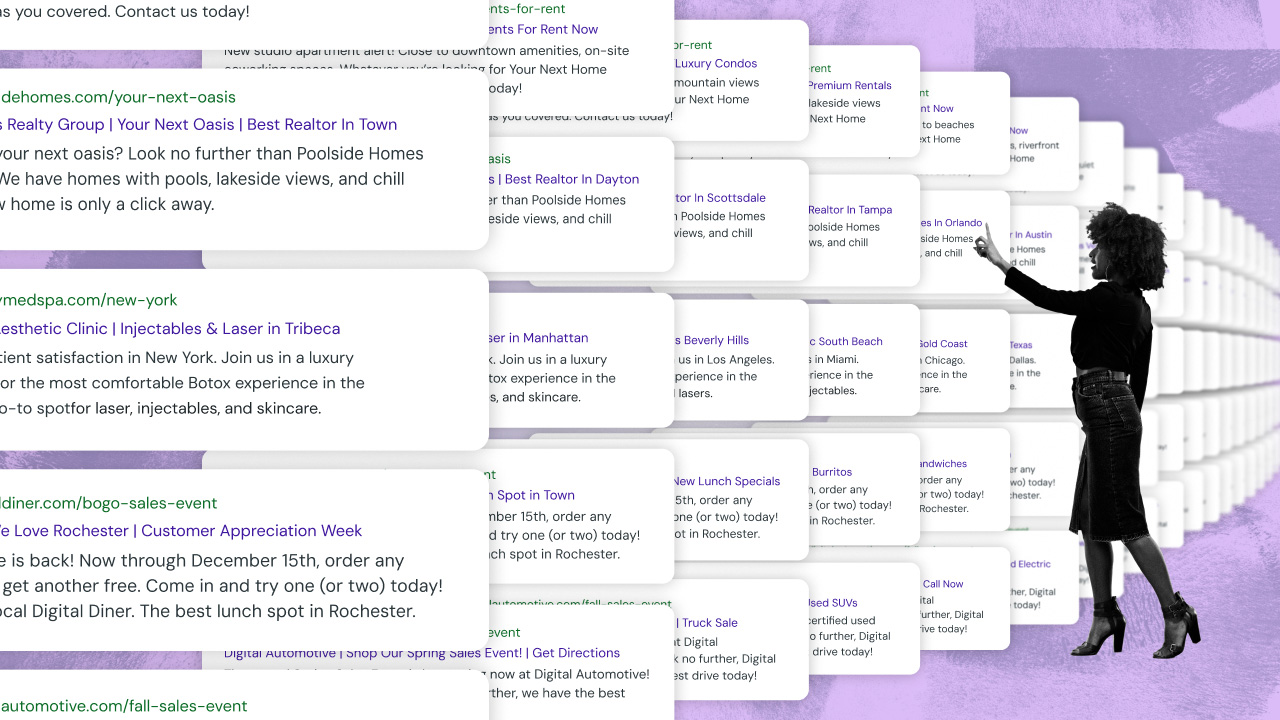
Unlike static templates, automation tools like Fluency Blueprints dynamically integrate creative assets, strategic or compliance requirements, and data (from first-party sources like CRMs and third-party publishers) into a single workflow. This gives you the unprecedented capability to launch dozens or hundreds of custom campaigns simultaneously with minimal manual effort.
Agencies are already using automation to drastically reduce the time they need to launch and refresh campaigns. Five Mile Marketing, an agency focused on running local advertising strategies for a wide range of clients, used automation to cut its five-to-10-day campaign launch workflow down to just a few minutes.
“We can deploy ads to large multi-location clients in minutes, versus days,” said Curt Feather, Founder at Five Mile Marketing. “This has allowed us to test more creatives, funnels, and landing pages and improve performance for our clients.”
Real-world proof: Reducing a 10-hour campaign launch workflow down to two hours
CyberMark, a multi-location advertising agency, needed 10 hours to set up and launch a single customer campaign. Now that they’ve adopted agentic automation (specifically, Fluency Blueprints), the team can launch campaigns in just two hours: a drastic 80% reduction in time.
“Fluency transformed our workflow to streamlined efficiency, helping us eliminate errors and focus on strategic goals,” said Brittany West, Sr. Director of Marketing Services at CyberMark.
The extra time for strategic and optimization work means the agency can to deliver better customer results, too. Following a strategy refresh for a beauty brand with over 100 locations, the team achieved a 33% average increase in conversion rates.
2. Automate hyper-localized ad refreshes directly from source data
“Anybody that's trying to run anything at scale with a certain level of depth has to feel the cost of execution,” said Mayhew. “It just takes a lot. The media buy versus the labor of execution is a ratio that I’d pay attention to. Media buying is becoming a smaller and smaller part, as the complexity and labor costs go up.”
The right automation tools can level the playing field for all your ad campaigns, regardless of the level of customization or complexity required. By seamlessly integrating first- and third-party data sets directly into your workflows, audience targeting and hyper-localization efforts can be managed from a single system rather than multiple disconnected tools.
Agencies can even utilize CRM integration to personalize messaging further, improving targeting and conversion rates. Regardless of the complexity that goes into building niche localized campaigns, automation enables you to build and launch assets with the same amount of work.
When a campaign is launched, the work’s not over. Our data indicates that AdOps teams spend 46 hours monthly (over 25% of their time) making campaign changes. That’s a lot of time spent refreshing and updating campaigns after launch!
Working directly with data sources means you can be confident that campaigns are always up-to-date with the most relevant data. When source data changes, your campaigns, ad groups, keywords, extensions, or creative assets update automatically.
“If data is your hub, the distribution networks in the campaigns that you generate off that become your spokes. As that one data set changes, it automatically automates all of those ad networks,” said Mayhew. “It keeps your strategy consistent and cohesive, centrally managed, and easy to scale.”
Your teams don’t have to implement changes and relaunch assets throughout the month: it’s done in sync with changes to your source data, saving teams hours of work every week.
How to build automated compliance and brand governance rules into your launch workflow
Automation also makes adhering to compliance requirements or brand standards easier. Building brand and compliance rules directly into automated workflows ensures that only assets that adhere to these rules will ship.
Plus, you’ll receive alerts to review assets that need attention if they don’t meet your pre-determined compliance standards. Delivering issues directly to your team means they can move faster than ever, particularly for QA workflows. You can refresh ads quickly and be confident that they’re compliant.
One of our agency clients, Johnson Group, reduced their QA time from 19 hours per week to just three hours when they integrated automation into their launch workflows—a staggering 84% decrease in QA time.
3. Integrate AI-generated copy recommendations without sacrificing brand voice or compliance
Copywriting and creative teams possess valuable strategic skill sets. Yet, they spend vast chunks of the workweek iterating on minor text variations or manually resizing assets for separate channels. This operational drag throttles creative velocity and stalls your entire campaign production workflow
Agentic ad creation resolves this bottleneck by cleanly splitting creative generation from live ad execution. Autonomous agents handle the probabilistic reasoning, like instantly generating keyword variations and ad copy tailored to specific target audiences. Crucially, an underlying deterministic execution layer runs automatic infrastructure checks against your hard-coded brand rules and compliance standards before those assets ever deploy to a publisher platform. This secures your brand guardrails while freeing creative talent to focus on high-value strategy.
Let's look at how this dual-layer AdOps architecture might look for ad asset generation. An AI interface surfaces creative recommendations based on best-performing ads and channel-specific best practices. then, a hard-coded automation layer handles the high-volume tactical tasks, like swapping out keyword and negative keyword lists. Even something like sourcing ad visuals stops being a manual scavenger hunt. Clients can upload approved images to a shared folder, automated workflows fetch them, and the system refreshes live ads with the updated assets automatically. Automated workflows can also deploy web-scanning tools to pull media collections straight from a live client URL.
Armed with these capabilities, ad operations leaders shift their teams from repetitive button-pushing to high-level system orchestration.
Improve click-through rates by automating multichannel user data targeting
Matching the right messages to the right audiences is vital, but it’s also time-consuming. Automation can create customized ads based on user data, like location, device type, and browsing behavior, ensuring that the most relevant and appealing messaging is delivered to the right potential customers.
Automating these targeting components enables teams to reach specific audiences with personalized messaging faster than inputting these same parameters manually on each publishing platform. Building, testing, and iterating ads across multiple channels quickly can drive increased click-through rates and, in turn, better overall campaign performance.
4. Replace one-off account checks with portfolio-wide automated tracking and notifications
The longer issues sit unresolved, the more detrimental the impact. Ads may not be served because daily budgets are too low, your audience is too narrow, or your current messaging isn’t resonating with audiences. Or, perhaps a campaign has a flighted budget but it was never turned on.
Whatever the problem, it’s a big ask for teams to find and address countless issues across different publishers, campaigns, and individual assets. But what if these problems were delivered right to you from every publisher? It’s possible with automated multichannel notifications.
Automation systems like Fluency sync real-time data from every publisher, channel, account, and campaign into one comprehensive system. Working from one view helps you identify specific risks and what to address first. The system identifies and prioritizes a wide range of errors, including critical issues (like zero-spend accounts) and settings that can be optimized for better performance (like domain configuration concerns).
Putting these errors front and center allows teams to address them faster than if they had to solve each individually on different channel platforms. Solving these issues quickly keeps customers happy, reduces operational inefficiencies, and gives your team hours back for more high-value work.
Case study: How Dealer.com centralizes multi-channel error logs into a single morning dashboard
After using Fluency for a while, Ben Gilbert, Senior Director of Advertising Innovation at Dealer.com (a Cox Automotive company), saw an opportunity to build automated notifications into his team’s daily operations.
Every strategist on Gilbert’s team begins their day working through notifications in a single dashboard. Powered by automation, this dashboard seamlessly integrates multi-channel notifications for every customer in a strategist’s portfolio. This means Gilbert’s team can see and resolve the most important issues at the start of their day.
“No longer do they have to hunt for something that's broken,” said Gilbert. “The dashboard tells them what needs attention or needs to be fixed in the first moment of the day.”
Gilbert says this gives the team hours back in their day to do “more strategic things or have more client conversations, which a lot of our reps just love doing,” instead of logging into different platforms and handling things on a one-off basis.
5. Eliminate manual performance report builds with automated cross-channel report generation
The velocity of digital advertising today means that analysis and reporting tasks can no longer take up the majority of your teams’ time. Data must empower your internal teams and customers to make informed, strategic decisions about advertising strategies.
As one respondent said in one of our recent client surveys:
“We manage a variety of different platforms. It can be difficult to make strategic decisions based on data when they are split across a variety of platforms and not pulled into one central view to optimize."
Automating data aggregation from every relevant data source (whether it’s publisher performance data, inventory data, CRM data, or vital spreadsheets) into a single system gives you unprecedented knowledge and strategic prowess. With this data, you can quickly understand what’s happening with campaigns, why it’s happening, and what to do next to optimize performance.
What about sharing these insights with customers? Good news: tools like AI and automation also make customer report generation a breeze.
As Gilbert quipped during an Advertising Week presentation on scaling AdOps capacity, “We always that it takes a small team just to put together decks. That's not a good use of our investment on the Ops side or a non-revenue-generating team.”
But if you have all the data you need, why should teams waste time laying out PowerPoints every month instead of acting upon the latest findings? Automation makes it possible to build reports that resonate with clients in just a few clicks, without sinking hours into updating last month’s numbers or laying everything out.
Customers get valuable, data-forward reports and teams save hours of time laying out monthly reports. Win-win.
Building tailored, client-ready performance decks with automated narrative insights
Automated and AI-enhanced reporting tools allow you to build tailored reports that highlight client-specific goals. This could mean comparing budget pacing across accounts or analyzing campaign-level keyword performance.
Fluency’s Muse AI helps deliver reports that go beyond simply sharing last month’s numbers. These reports explain trends, wins, and growth opportunities to customers, conveying exactly how your agency’s work drives their success.
These reports can be branded with customer logos and brand identity colors, further saving time on report generation while still adding that je ne sais quoi white glove experience your customers appreciate and expect.
FAQ: ad automation for agencies
How does ad automation improve multichannel agency workflows?
Ad automation improves multichannel agency workflows by replacing manual, platform-by-platform execution with centralized, rules-based systems. Using a Digital Advertising Operating System, agencies can build and launch campaigns across Google Ads, Meta, and programmatic DSPs simultaneously, automate error detection across their entire portfolio, and generate client-ready performance reports in minutes rather than hours.
How long does it take to launch campaigns with ad automation?
With automation tools like Fluency Blueprints, agencies can reduce campaign launch times from days or weeks to minutes. CyberMark, a multi-location advertising agency, cut a 10-hour campaign launch workflow down to two hours - an 80% reduction - after adopting agentic automation.
How does automation reduce QA time for ad agencies?
Automation reduces QA time by building compliance and brand governance rules directly into campaign launch workflows. Assets that don't meet pre-set standards are flagged automatically before they deploy. Johnson Group reduced their QA time from 19 hours per week to three hours after integrating automation - an 84% decrease.
What is the difference between AI and agentic automation in advertising?
AI handles probabilistic tasks like generating copy recommendations, surfacing performance trends, and analyzing audience data. Agentic automation handles deterministic execution - moving budgets, launching campaigns, updating assets - based on hard-coded rules and governance standards. The two work together: AI at the strategic interface, automation at the execution layer.
Preparing your agency for autonomous, AI-powered ad operations
To stay ahead, your agency needs to harness a unified operating system that drives faster execution, protects delivery precision, and unlocks sustainable account growth.
Today’s digital advertising automation tools are built to empower ad agencies like yours with the capacity to scale with ease. Teams can manage multiple campaigns in bulk and make data-powered optimizations on the fly while staying organized and efficient. You can also reduce manual work and human error across the entire AdOps workflow, freeing up time for strategic work that keeps team members engaged and happy.
Aggregating data from every relevant source also expedites tasks like ad creation, analysis, and reporting. When teams can see everything at once, they can synthesize valuable findings and make changes that are both timely and impactful. Customized, automated reports empower agencies to deliver actionable insights, keep campaigns on track, and drastically reduce the time and labor spent compiling data for optimizations or monthly reports.
By embracing automation, your agency can improve its operational efficiency while boosting client satisfaction and business growth. Now is the time to build an operational framework where speed and precision drive long-term expansion.
Related Posts

How is Agentic Automation Used in Digital Advertising?