Leadership Perspectives: How to Govern Agentic AI in Advertising

Governing AI agents within advertising operations means placing deterministic agents between large language models (LLMs) and live campaigns on ad platforms. LLMs, which are probabilistic and return different answers each time, should not be in charge of spending money or adhering to strict parameters without a governing system enforcing rules before going live.
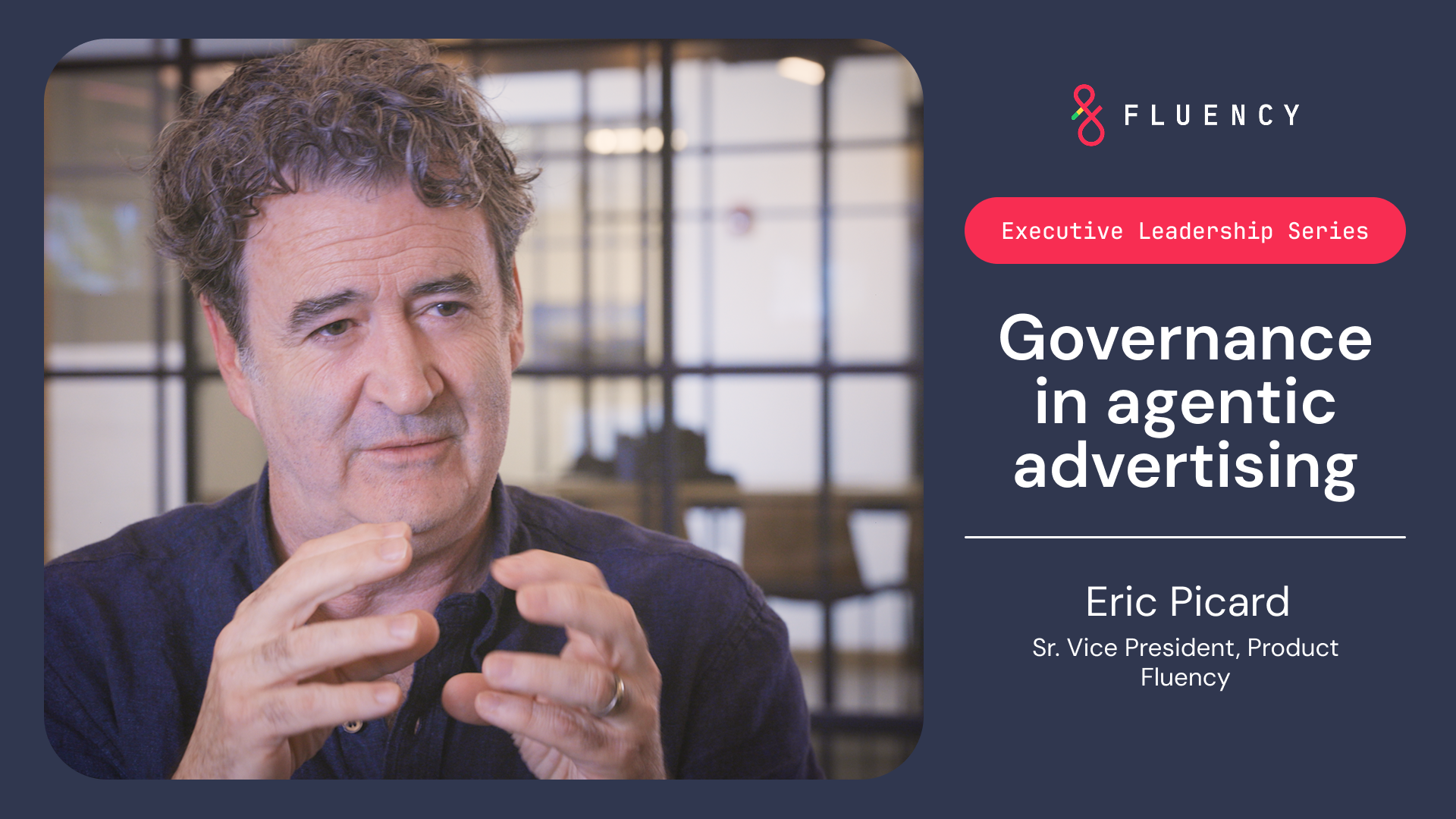
In this video, Eric Picard (SVP of Product at Fluency) explains why governance is the most critical piece of any LLM-based decision process. Writing hard-coded rules—like budget spend limits and prohibited brand terms—into AI prompts does not guarantee an LLM will stick to them.
Getting an LLM to do exactly what you want is nearly impossible because LLMs are probabilistic: they’ll give different answers when asked the same question. While this is great for creative problem-solving or decision-making, it’s incredibly risky when you need to execute the same outcomes every time.
How to govern agentic AI in advertising: put deterministic agents in charge of live spend
Advertisers can solve for the volatility of AI agents by putting a deterministic interface between AI decisions and live ad platforms. Trusting automation-based agents with task execution controls the risk generated by AI because deterministic agents only execute actions that your governance rules have approved.
For the last eight years, Fluency has safely used deterministic agents to execute end-to-end campaign tasks inside major third-party ad platforms like Google Ads, Meta Ads, and The Trade Desk. More than $3 billion in ad spend is managed by Fluency’s deterministic agents every year.
Should you build or buy your agentic advertising workflows?
Related Content
Leadership Perspectives: How to Govern Agentic AI in Advertising